
















As Syria’s transitional government dismantles the Assad regime’s drug trade legacy, it must also remedy another crisis alongside it.

India's judiciary may finally be experiencing a long-overdue reckoning on the hostile environment for women civil servants, one marked by systemic harassment, intimidation, institutional abandonment, and arbitrary dismissal.

In the last decade, an estimated 15,000 women across the globe have been accused of abducting their own children. They are all foreigners who tried to relocate with their children — oftentimes back to their home countries — but the other parent disagreed. Not all countries criminalize abduction, but the repercussions for the child’s custody are far-reaching.

As men migrate north to the United States in search of better lives for their families, the women left behind are taking on many new community responsibilities once occupied by their husbands.

The competition for the presidency, between the only son of a “strongman” and a widow, resonates with the enduring friction between a woman-centered native culture and the infrastructure of patriarchal political dynasties bred by colonialism in the Philippines.

Women who participated in anti-CAA protests nearly two years ago continue to be targeted by law enforcement, bearing the full brunt of the security apparatus or facing aggressive intimidation.
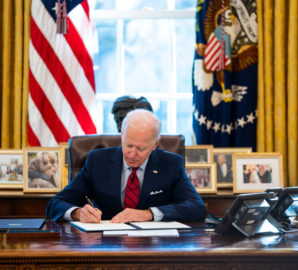
While President Biden’s memorandum provides a welcome change to the dangerous situation established by the Trump administration, it only partly restores the status quo of four years ago. The timing, presentation, and language of the actions indicate that abortion rights advocates will have to continue to fight to make abortion rights a bigger priority for the Biden administration.
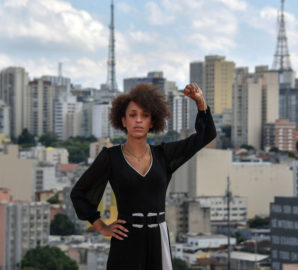
The growth in political representation of Black and trans women in Brazil's city governments has not gone unnoticed by right-wing parties, making them visible targets for racist and death threats and abuse.
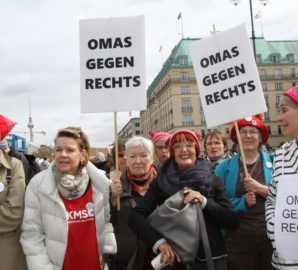
OMAS GEGEN RECHTS, or “Grandmothers Against the Extreme Right,” challenges the revival of far-right extremism with personal histories inextricably tied to theirs and their parents' experiences with similar movements in the past against fascism, misogyny, and racism.

Burmese women are critical to understanding a country whose people have endured systematic violence and repression for far too long. They can’t be forgotten.

Women Under Siege spoke with Lisa Wade, PhD, an associate professor of sociology at Occidental College and author of American Hookup: The New Culture of Sex on Campus, to better understand the relationship—and long history—between white supremacy, masculinity, and the American image.

As Congress deliberates ratifying the Uyghur Human Rights Policy Act of 2019, Women Under Siege spoke with Mihrigul Tursun, a Uighur refugee, about her experience at what she describes as an "ethnic cleansing camp" for Uighurs in China's Xinjiang region.

If women have historically been silenced and ignored about experiences of conflict-related sexual violence, the inverse is now true: survivors are being pressured to share their stories, emphasizing heinous details of sexual abuse and little else.

Organized criminal gangs displaced hundreds of families from their homes in the mountains of Guerrero state, Mexico. It's the women—mothers, grandmothers, aunties, and sisters alike—who are keeping their communities together.

Several women had reported being raped by security forces during the government crackdown on protests in January. Since then, no formal investigations have been undertaken; no formal independent complaints mechanism has been established; and the outrage has dissipated.

Why women remain outside the doors of political power is more nuanced than simply attributing it to sexism.

Coverage of family separations at the U.S.-Mexico border has stirred outrage. But is what's happening new?

Governments’ political orientation does not determine whether they pursue more or less restrictive migration policies. New research from Katharina Natter and Hein de Haas debunks accepted wisdom on the politics of migration.

A multi-pronged approach that encourages Kenyan magistrates, prosecutors, doctors, clinicians, and government chemists to work together in pursuit of justice has helped fast track sexualized violence cases and bring justice closer to survivors.

Despite the peace agreement between the Colombian government and the Revolutionary Armed Forces of Colombia People’s Army being the first in the world to acknowledge the different realities and disadvantages women and the LGBTQ population face, advocates say deeply entrenched misogyny is stalling progress.

Operation Condor, a France and U.S.-endorsed campaign of torture in South America, is long over. But the brutality it wrought still echoes today.

Obituaries of Gen. Efraín Ríos Montt only tell part of the story. Here's the rest.

They are the hidden cost of Rodrigo Duterte’s drug war in the Philippines: single, teenage mothers whose partners have been killed by police or vigilantes. And without a job or government support, it’s near impossible for them to support their children.

U.S. Ambassador to the UN Nikki Haley is going to Africa. South Sudan, the Democratic Republic of Congo, and Ethiopia, specifically. She says in an October 22 CNN op-ed that President Trump is sending her “to get a first-hand picture of what can be done.”

The Irish government announced in September they would hold a referendum on the 8th Amendment in mid-2018—a long-awaited move by many in the country. The announcement followed years of campaigning by pro-choice organizations in Ireland.