















The correlation between climate change resilience and girls’ education
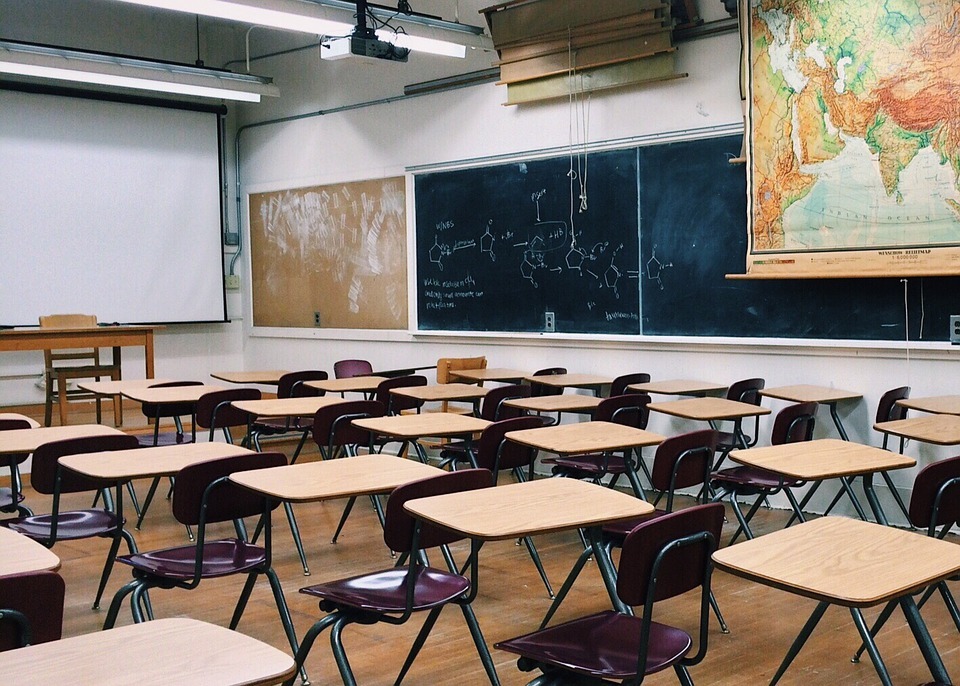
There is a potential solution to climate change that is as unexpected as it is potentially effective: girls' education. According to a 2017 Brookings Institution study, for every additional year of schooling a girl received on average, her county’s resilience to climate disasters rose 3.2 points, as measured by the ND-GAIN Index (which calculates a country’s vulnerability to climate change in relation to its resilience). The research organization Project Drawdown also recognizes the implications of this correlation. In fact, out of 100 solutions they present to tackle climate change, educating girls ranks among the top 10 most efficient.
The five countries that had the lowest numbers of girls receiving proper education, according to the Brookings Institution study, were all African countries — and all also had the lowest levels of resilience to climate disasters. Ugandan economist Alice Ruhweza, who currently serves as the Africa Lead for World Wide Fund for Nature (WWF International), explained her personal thoughts on this correlation to The FBomb.
The FBomb: Can you explain the relationship between African girls' access to education and climate change?
Alice Ruhweza: There are two ways to look at this. One is that the damaging effects of climate change tend to hit the most vulnerable and least skilled people in developing countries — largely girls and women.
Take the El Niño-related climate shocks in Southern and Eastern Africa in 2016-2017. Heavy rains swept away houses and destroyed farms and roads, and due to crop losses, many households could no longer fully afford school-related expenses. In many of these cases, girls were often the first to be withdrawn from school or attend school less so they could help with household chores. In Malawi, it is estimated that 30 to 40 percent of child marriages are due to poverty caused by flooding and droughts due to climate change. In Botswana, girls make up 70 percent of children taken out of school during times of drought.
Second, well-educated girls and women can be a powerful part of the solution to this problem. When girls and women are better educated and included in decision-making at all levels, their families and communities are more resilient and adaptable to economic and environmental shocks and are better able to plan for, cope with, and rebound from climate crises.
How does education specifically about family planning play into this dynamic?
There is clear evidence that climate change is human induced — either directly or indirectly through overpopulation which leads to overconsumption, pollution, land degradation, and deforestation. In many of the environmentally and socially challenged landscapes in Africa where I have worked, two problems are always prevalent: high levels of illiteracy and high rates of fertility.
Data from the World Bank shows that the difference in the number of children born between a woman who has had zero years of schooling and one who has had 12 years is four to five children per woman. Every additional year of schooling for a girl increases her future earnings by 10 to 20 percent, and when 10 percent more girls go to school, a country’s GDP increases by an average of 3 percent.
The multiplier effects are very clear: By keeping girls in school, we can reduce overpopulation and all the resulting problems. Better-educated women give birth to fewer children and earn more. Evidence from many places where I have worked shows that when women make more money, they make better decisions for the planet. For example, they don’t collect firewood from the forest, but instead invest in an energy-saving stove.
What is the current status of family planning education in African countries?
A recent study by researchers at Johns Hopkins Bloomberg School of Public Health shows that women in eight sub-Saharan African countries — Burkina Faso, the Democratic Republic of Congo, Ethiopia, Ghana, Kenya, Niger, Nigeria, and Uganda — are gaining access to and using modern contraception at a faster rate than previously projected. This rate, the study finds, is well ahead of benchmark goals of the 18 Initial Family Planning 2020 Initiative, of which these countries are a part. The initiative is designed to give access to family planning services to an additional 120 million women in 69 of the world's poorest countries by 2020.
The authors note that one possible explanation for these high rates of modern contraception use could be the introduction of contraceptive implants in the sub-Saharan region. The proportion of users in the study who rely on implants ranged from 12.4 percent in Lagos, Nigeria, to 50.3 percent in Burkina Faso.
Another factor contributing to the robust increase in modern contraceptive prevalence rates is that countries are now committing more resources to family planning; proactive local programs have improved provider training, supply, and distribution of contraceptives. There has also been an increase in family planning content in mass media.
The biggest problem is that we are not currently linking such gains to the efforts to address climate change — and yet education, family planning, and nutrition are some of the big game changers we have. We need to connect these dots and also see the multiplied effects of these investments.
Are there differences in how African countries regard climate change, as opposed to how it's viewed in the West?
In Africa, we do not have [climate change] deniers [the same way the West does]. Climate change is very clear. From extensive droughts to cyclones in Mozambique, Zimbabwe, and Zambia, the evidence is there for all to see. African leaders are committed to addressing climate change. There can be no doubt that Africa is one of the regions of the world that is hardest hit by climate change. Its effects are already visible and palpable, with real impacts on the lives of millions of Africans.
What is being done to address climate change in Africa and how is that being done?
African leaders, aware of the continent’s vulnerability, have long supported international efforts to combat global warming and climate change. African governments were prime movers behind the 1994 U.N. convention to combat desertification — a particular concern on a continent where two-thirds of the land is arid or semi-arid. Many African countries also were early signatories to the 1992 U.N. Framework Convention on Climate Change (UNFCCC) and the 1997 Kyoto Protocol, the first and to date only international treaty setting binding limits on pollution emissions.
Currently, a lot is being done to address climate change in Africa. Agroforestry — climate-smart agriculture — is increasing the resilience of smallholder farmers to climate extremes. Diversifying food production and establishing social protection mechanisms increases the socio-economic resilience of rural populations so they are less vulnerable to shocks. Agricultural technology helps farmers mitigate and adapt to climate change. There are also natural climate solutions, such as the Africa forest landscape restoration, which is restoring 111 million hectares of land by 2030.
More articles by Category: Education, Environment
More articles by Tag: Africa, Climate change, Reproductive rights, Sexism


